
国际妇产科学杂志 ›› 2026, Vol. 53 ›› Issue (4): 438-441.doi: 10.12280/gjfckx.20251391

• 普通妇科疾病及相关研究:论著 • 上一篇    下一篇

吉曼双环固定术在宫腔增大子宫腺肌病患者中预防曼月乐脱落的临床研究

蒋倩颖, 赵绍杰, 唐艳()   

  1. 214000 无锡市妇幼保健院(江南大学附属妇产医院)妇科
  • 收稿日期:2025-12-08 出版日期:2026-08-15 发布日期:2026-08-25
  • 通讯作者: 唐艳 E-mail:yyj17270@163.com
  • 基金资助:
    无锡市医学发展学科妇产科学(FZXK2021008)

Clinical Study on the Jiman Double-Ring Fixation Technique for Preventing Mirena Expulsion in Patients with Adenomyosis and Enlarged Uterine Cavity

JIANG Qian-ying, ZHAO Shao-jie, TANG Yan()   

  1. Department of Gynecology, Wuxi Maternity and Child Health Care Hospital, Affiliated Women's Hospital of Jiangnan University, Wuxi 214000, Jiangsu Province, China
  • Received:2025-12-08 Published:2026-08-15 Online:2026-08-25
  • Contact: TANG Yan E-mail:yyj17270@163.com

摘要:

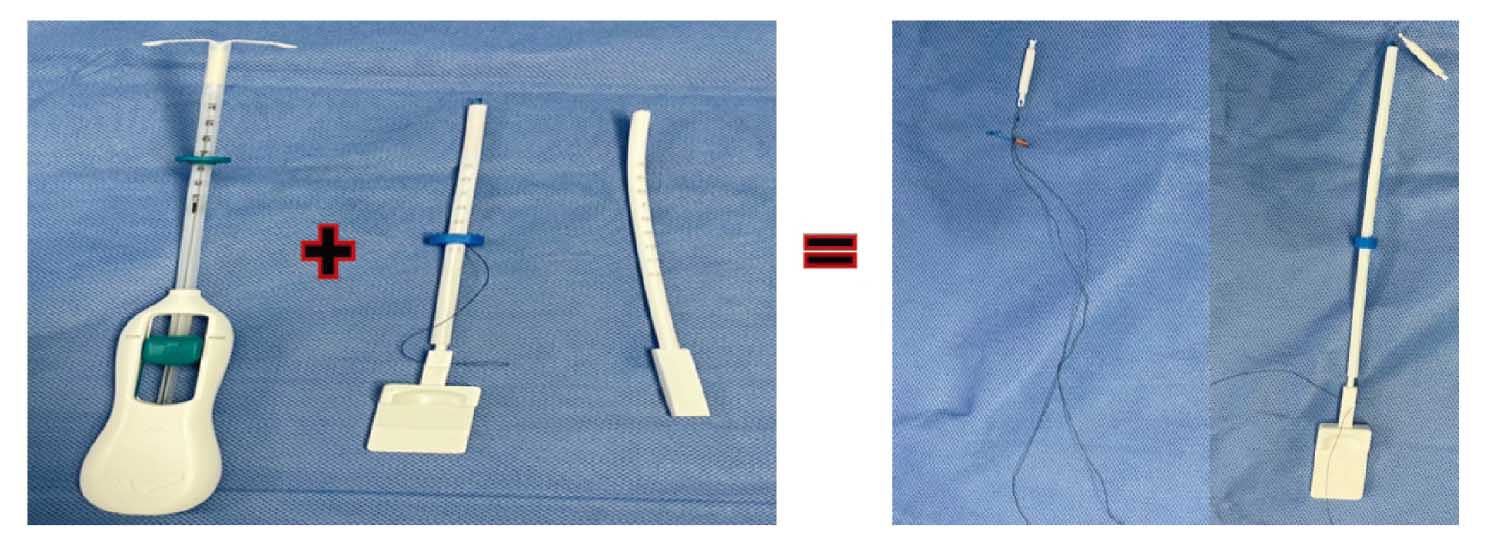
目的:探讨吉曼双环固定术在宫腔增大的既往使用曼月乐移位、脱落的子宫腺肌病患者中的应用价值,评估其减少曼月乐再次移位、脱落,改善患者临床症状的有效性及安全性。方法:回顾性分析2023年1月—2024年6月在我院实施吉曼双环固定术治疗的50例子宫腺肌病患者的临床资料。采用吉妮致美锚定子宫肌层、同步固定曼月乐的手术方式,术中配合实时超声监测来探测吉曼双环放置的位置是否安全;术后随访12个月,统计吉曼双环位置、月经失血图(pictorial blood loss assessment chart,PBAC)评分、视觉模拟评分法(visual analogue scale,VAS)评分及并发症发生情况。结果:本次入组50例子宫腺肌病患者均在超声监测下顺利完成吉曼双环固定术,平均手术时间(12.6±3.1)min,平均术中出血量为(4.8±1.5)mL。术中未见子宫穿孔、大出血、感染等严重并发症。曼月乐脱落率为0%,移位率为4.0%(2例轻度下移,未影响疗效)。术前PBAC评分(215.6±42.8)分,术后3、6、12个月PBAC评分分别为(92.3±21.5)分、(65.1±18.7)分、(52.6±15.3)分;术前VAS评分(7.3±1.5)分,术后3、6、12个月VAS评分分别为(4.2±1.3)分、(2.8±0.9)分、(1.6±0.7)分。各随访时间点的评分与术前相比,差异均有统计学意义(均P<0.001)。术后不良反应主要表现为术后3个月内月经间期点滴阴道出血,未对日常生活产生明显影响,发生率52.0%,无严重不良反应发生。结论:吉曼双环固定术利用锚定协同固定原理,使宫腔增大的子宫腺肌病患者放置曼月乐的脱落或移位率显著降低,术后亦能获得满意的止血效果,痛经症状也显著缓解。该术式简单、安全,为临床解决曼月乐易移位、脱落的难题提供了新的方法。

关键词: 宫内避孕器,含药, 宫内避孕器,铜, 宫内避孕器游走, 宫内避孕器排出, 子宫腺肌病, 宫腔增大, 吉曼双环固定术

Abstract:

Objective: To explore the application value of the Jiman double-ring fixation technique in patients with adenomyosis and enlarged uterine cavity who have a history of Mirena displacement or expulsion, and to evaluate its effectiveness and safety in reducing the recurrence of Mirena displacement/expulsion and improving clinical symptoms. Methods: Clinical data of 50 patients with adenomyosis who underwent Jiman double-ring fixation procedure at our hospital from January 2023 to June 2024 were retrospectively analyzed. The surgical technique involved anchoring the uterine myometrium with GyneFix to simultaneously secure the Mirena intrauterine system. Intraoperative real-time ultrasound monitoring was used to assess the safe placement of the Jiman double-ring. Postoperative follow-up was conducted for 12 months, during which the position of the Jiman double-ring, pictorial blood loss assessment chart (PBAC) scores, visual analogue scale (VAS) scores, and complications were recorded. Results: All 50 enrolled patients with adenomyosis successfully underwent the Jiman double-ring fixation procedure under ultrasound guidance. The average operative time was (12.6±3.1) minutes, and the average intraoperative blood loss was (4.8±1.5) mL. No severe intraoperative complications such as uterine perforation, major hemorrhage, or infection were observed. The expulsion rate of Mirena was 0%, and the displacement rate was 4.0% (2 cases of mild displacement without affecting efficacy). The preoperative PBAC score was (215.6±42.8) points. Postoperative PBAC scores at 3, 6, and 12 months were (92.3±21.5) points, (65.1±18.7) points, and (52.6±15.3) points, respectively. The preoperative VAS score was (7.3±1.5) points. Postoperative VAS scores at 3, 6, and 12 months were (4.2±1.3) points, (2.8±0.9) points, and (1.6±0.7) points, respectively. The differences between scores at all follow-up time points and preoperative scores were statistically significant (all P<0.001). The main postoperative adverse reaction was intermenstrual spotting within the first 3 months, which did not significantly affect daily life, with an incidence of 52.0%. No severe adverse reactions occurred. Conclusions: Utilizing the principle of synergistic anchoring and fixation, the Jiman double-ring fixation technique significantly reduces the expulsion and displacement rates of Mirena in patients with adenomyosis and an enlarged uterine cavity. Postoperatively, satisfactory hemostatic effects and significant relief of dysmenorrhea symptoms can also be achieved. This technique is simple and safe, offering a new method for clinically addressing the challenge of easy displacement and expulsion of Mirena.

Key words: Intrauterine devices, medicated, Intrauterine devices, copper, Intrauterine device migration, Intrauterine device expulsion, Adenomyosis, Enlarged uterine cavity, Jiman double-ring fixation