
Journal of International Obstetrics and Gynecology ›› 2025, Vol. 52 ›› Issue (4): 467-473.doi: 10.12280/gjfckx.20250527
• Gynecological Disease & Related Research:Original Article • Previous Articles Next Articles
LIU Lin-lin( ), HUANG Xiao-wu, XIA En-lan
Received:2025-05-19
Published:2025-08-15
Online:2025-09-08
Contact:
LIU Lin-lin, E-mail: LIU Lin-lin, HUANG Xiao-wu, XIA En-lan. Analysis of Hysteroscopic Imaging Characteristics of Endometrial Tuberculosis Patients with Successful Pregnancy[J]. Journal of International Obstetrics and Gynecology, 2025, 52(4): 467-473.
Add to citation manager EndNote|Ris|BibTeX
| 序号 | 初诊 年龄 (岁) | HS | 宫腔镜 手术 | 输卵管 情况 | HS前 | HS后 | ||||
|---|---|---|---|---|---|---|---|---|---|---|
| 月经 情况 | 妊娠 情况 | 妊娠方式 | 妊娠结局 | |||||||
| 1 | 27 | 宫腔正常 | 否 | 双侧通畅 | 少 | 原发性不孕 | 第1次自然妊娠成功 | 孕足月顺产 | ||
| 2 | 32 | 宫腔正常 | 否 | 双侧通而不畅 | 少 | 原发性不孕 | 第1次IVF-ET 成功 | 孕足月顺产 | ||
| 3 | 37 | 宫腔正常 | 否 | 未查 | 少 | 原发性不孕 | 第4次IVF-ET 成功 | 孕足月CS | ||
| 4 | 26 | 宫腔正常 | 否 | 外院腹腔镜探 查示术中一侧 切除一侧通畅 | 少 | 流产1次 | 第1次自然妊娠成功 | 因前置胎盘孕34周早产CS | ||
| 5 | 31 | 宫腔正常 | 否 | 双侧阻塞 | 少 | 原发性不孕 | 第4次IVF-ET 成功 | 孕36周早产CS(双胎) | ||
| 6 | 36 | 形态正常,内膜局灶充血 | 否 | 未查 | 少 | 原发性不孕 | 第6次IVF-ET 成功 | 孕足月CS | ||
| 7 | 30 | 形态正常,内膜弥漫性充血 | 否 | 未查 | 少 | 流产1次 | 第2次IVF-ET 成功 | 异位妊娠1次 | ||
| 8 | 22 | 形态正常,内膜弥漫性充血 | 否 | 双侧阻塞 | 少 | 原发性不孕3年 | IVF-ET 2次,均成功妊娠 | 孕足月顺产1次,孕足月CS 1次 | ||
| 9 | 28 | 形态正常,双侧宫角多个黄白色小凸起,内膜结核结节 | 否 | 未查 | 少 | 原发性不孕 | 第1次IVF-ET 成功 | 因胎膜早破孕32周早产CS | ||
| 10 | 29 | 形态正常,内膜上多发结核结节 | 否 | 双侧阻塞 | 正常 | 原发性不孕 | 第1次IVF-ET 成功 | 因巨大儿孕足月CS | ||
| 11 | 29 | 形态正常,内膜大小不等的结核性息肉+左侧宫角局灶黄白色结核样凸起 | 否 | 双侧通畅 | 正常 | 原发性不孕 | 第1次自然妊娠成功 | 孕足月顺产 | ||
| 12 | 31 | 形态正常,双侧输卵管开口处小的结核性息肉 | 否 | 双侧结扎 | 少 | 原发性不孕 | 第3次IVF-ET 成功 | 因年龄大要求孕足月CS | ||
| 13 | 26 | 形态正常,多发结核性息肉,右侧宫角散在白点 | 否 | 双侧阻塞 | 正常 | 流产1次 | 第3次IVF-ET 成功 | 孕足月双胎CS | ||
| 14 | 26 | 形态正常,多发结核性息肉 | 否 | 双侧阻塞 | 少 | 原发性不孕 | IVF-ET 2次,均成功妊娠 | 第1次足月顺产,第2次因臀位孕足月CS | ||
| 15 | 30 | 形态正常,多发结核性息肉 | 否 | 未查 | 少 | 原发性不孕 | 第1次IVF-ET 成功 | 孕足月顺产 | ||
| 16 | 33 | 形态正常,多发结核性息肉 | 否 | 双侧通畅 | 正常 | 原发性不孕 | 第1次自然妊娠成功 | 孕足月因巨大儿CS | ||
| 17 | 35 | 形态正常,多发结核性息肉 | TCRP | 双侧通畅 | 少 | 原发性不孕9年 | 2次IVF-ET失败,之后1次自然妊娠 | 异位妊娠 | ||
| 18 | 31 | 形态正常,多发结核性息肉 | TCRP | 外院腹腔镜探 查为双侧阻塞 | 正常 | 原发性不孕3年 | 第2次IVF-ET 成功 | 孕足月顺产 | ||
| 19 | 27 | 轻度IUA | TCRA | 未查 | 少 | 原发性不孕5年 | 第2次IVF-ET 成功 | 孕20周因宫颈机能不全自然流产 | ||
| 20 | 30 | 中度IUA | TCRA | 双侧阻塞 | 少 | 原发性不孕 | 第1次IVF-ET成功 | 孕足月顺产 | ||
| 21 | 33 | 中度IUA | TCRA | 双侧阻塞 | 少 | 原发性不孕 | 第1次IVF-ET 成功 | 孕足月顺产 | ||
| 22 | 31 | 中度IUA | TCRA | 未查 | 少 | 原发性不孕 | 第1次IVF-ET 成功 | 孕足月CS | ||
| 23 | 30 | 中度IUA | TCRA | 未查 | 少 | 原发性不孕 | 第1次IVF-ET 成功 | 双胎,孕32+3周早产CS | ||
| 24 | 33 | 中度IUA | TCRA | 双侧阻塞 | 少 | 原发性不孕 | 第7次IVF-ET 成功 | 孕足月顺产 | ||
| 25 | 39 | 中度IUA | TCRA | 未查 | 少 | 原发性不孕 | 第1次IVF-ET 成功 | 孕足月顺产 | ||
| 26 | 28 | 中度IUA | TCRA | 未查 | 少 | 原发性不孕 | 第1次IVF-ET 成功 | 现妊娠33周 | ||
| 27 | 34 | 中度IUA | TCRA | 双侧阻塞 | 少 | 原发性不孕9年 | 第2次IVF-ET 成功 | 孕足月顺产 | ||
| 28 | 28 | 中度IUA | TCRA | 双侧阻塞 | 少 | 流产1次 | 第3次IVF-ET 成功 | 妊娠5+个月中 | ||
| 29 | 28 | 中度IUA | TCRA | 双侧通畅 | 少 | 流产4次 | 第1次自然妊娠成功 | 2021年因妊娠期高血压孕35+3周早产CS | ||
| 30 | 32 | 右侧宫角黄白色干酪样组织+中度IUA | TCRA | 双侧通畅 | 正常 | 原发性不孕 | 第1次自然妊娠成功 | 孕足月顺产 | ||
| 31 | 25 | 满腔干酪样坏死+重度IUA | TCRA | 未查 | 少 | 原发性不孕 | 第1次IVF-ET 成功 | 孕足月CS | ||
| 32 | 26 | 满腔干酪样坏死+重度IUA | TCRA | 双侧阻塞 | 闭经2年半 | 原发性不孕 | 第5次IVF-ET 成功 | 孕足月顺产 | ||
| 33 | 25 | 重度IUA | TCRA | 双侧阻塞 | 闭经7年 | 原发性不孕 | 第3次IVF-ET 成功 | 妊娠3+个月中 | ||
| 34 | 39 | 重度IUA | TCRA | 双侧切除 | 少 | 原发性不孕 | 第2次IVF-ET 成功 | 因妊娠期高血压于孕32周早产CS,产后再次IUA | ||
| 35 | 27 | 重度IUA | TCRA | 双侧阻塞 | 闭经4年 | 流产1次 | 第7次IVF-ET 成功 | 妊娠3+个月中 | ||
| 36 | 27 | 重度IUA | TCRA | 双侧阻塞 | 闭经 | 原发性不孕 | 第7次IVF-ET 成功 | 孕足月顺产 | ||
| 序号 | 初诊 年龄 (岁) | HS | 宫腔镜 手术 | 输卵管 情况 | HS前 | HS后 | ||||
|---|---|---|---|---|---|---|---|---|---|---|
| 月经 情况 | 妊娠 情况 | 妊娠方式 | 妊娠结局 | |||||||
| 1 | 27 | 宫腔正常 | 否 | 双侧通畅 | 少 | 原发性不孕 | 第1次自然妊娠成功 | 孕足月顺产 | ||
| 2 | 32 | 宫腔正常 | 否 | 双侧通而不畅 | 少 | 原发性不孕 | 第1次IVF-ET 成功 | 孕足月顺产 | ||
| 3 | 37 | 宫腔正常 | 否 | 未查 | 少 | 原发性不孕 | 第4次IVF-ET 成功 | 孕足月CS | ||
| 4 | 26 | 宫腔正常 | 否 | 外院腹腔镜探 查示术中一侧 切除一侧通畅 | 少 | 流产1次 | 第1次自然妊娠成功 | 因前置胎盘孕34周早产CS | ||
| 5 | 31 | 宫腔正常 | 否 | 双侧阻塞 | 少 | 原发性不孕 | 第4次IVF-ET 成功 | 孕36周早产CS(双胎) | ||
| 6 | 36 | 形态正常,内膜局灶充血 | 否 | 未查 | 少 | 原发性不孕 | 第6次IVF-ET 成功 | 孕足月CS | ||
| 7 | 30 | 形态正常,内膜弥漫性充血 | 否 | 未查 | 少 | 流产1次 | 第2次IVF-ET 成功 | 异位妊娠1次 | ||
| 8 | 22 | 形态正常,内膜弥漫性充血 | 否 | 双侧阻塞 | 少 | 原发性不孕3年 | IVF-ET 2次,均成功妊娠 | 孕足月顺产1次,孕足月CS 1次 | ||
| 9 | 28 | 形态正常,双侧宫角多个黄白色小凸起,内膜结核结节 | 否 | 未查 | 少 | 原发性不孕 | 第1次IVF-ET 成功 | 因胎膜早破孕32周早产CS | ||
| 10 | 29 | 形态正常,内膜上多发结核结节 | 否 | 双侧阻塞 | 正常 | 原发性不孕 | 第1次IVF-ET 成功 | 因巨大儿孕足月CS | ||
| 11 | 29 | 形态正常,内膜大小不等的结核性息肉+左侧宫角局灶黄白色结核样凸起 | 否 | 双侧通畅 | 正常 | 原发性不孕 | 第1次自然妊娠成功 | 孕足月顺产 | ||
| 12 | 31 | 形态正常,双侧输卵管开口处小的结核性息肉 | 否 | 双侧结扎 | 少 | 原发性不孕 | 第3次IVF-ET 成功 | 因年龄大要求孕足月CS | ||
| 13 | 26 | 形态正常,多发结核性息肉,右侧宫角散在白点 | 否 | 双侧阻塞 | 正常 | 流产1次 | 第3次IVF-ET 成功 | 孕足月双胎CS | ||
| 14 | 26 | 形态正常,多发结核性息肉 | 否 | 双侧阻塞 | 少 | 原发性不孕 | IVF-ET 2次,均成功妊娠 | 第1次足月顺产,第2次因臀位孕足月CS | ||
| 15 | 30 | 形态正常,多发结核性息肉 | 否 | 未查 | 少 | 原发性不孕 | 第1次IVF-ET 成功 | 孕足月顺产 | ||
| 16 | 33 | 形态正常,多发结核性息肉 | 否 | 双侧通畅 | 正常 | 原发性不孕 | 第1次自然妊娠成功 | 孕足月因巨大儿CS | ||
| 17 | 35 | 形态正常,多发结核性息肉 | TCRP | 双侧通畅 | 少 | 原发性不孕9年 | 2次IVF-ET失败,之后1次自然妊娠 | 异位妊娠 | ||
| 18 | 31 | 形态正常,多发结核性息肉 | TCRP | 外院腹腔镜探 查为双侧阻塞 | 正常 | 原发性不孕3年 | 第2次IVF-ET 成功 | 孕足月顺产 | ||
| 19 | 27 | 轻度IUA | TCRA | 未查 | 少 | 原发性不孕5年 | 第2次IVF-ET 成功 | 孕20周因宫颈机能不全自然流产 | ||
| 20 | 30 | 中度IUA | TCRA | 双侧阻塞 | 少 | 原发性不孕 | 第1次IVF-ET成功 | 孕足月顺产 | ||
| 21 | 33 | 中度IUA | TCRA | 双侧阻塞 | 少 | 原发性不孕 | 第1次IVF-ET 成功 | 孕足月顺产 | ||
| 22 | 31 | 中度IUA | TCRA | 未查 | 少 | 原发性不孕 | 第1次IVF-ET 成功 | 孕足月CS | ||
| 23 | 30 | 中度IUA | TCRA | 未查 | 少 | 原发性不孕 | 第1次IVF-ET 成功 | 双胎,孕32+3周早产CS | ||
| 24 | 33 | 中度IUA | TCRA | 双侧阻塞 | 少 | 原发性不孕 | 第7次IVF-ET 成功 | 孕足月顺产 | ||
| 25 | 39 | 中度IUA | TCRA | 未查 | 少 | 原发性不孕 | 第1次IVF-ET 成功 | 孕足月顺产 | ||
| 26 | 28 | 中度IUA | TCRA | 未查 | 少 | 原发性不孕 | 第1次IVF-ET 成功 | 现妊娠33周 | ||
| 27 | 34 | 中度IUA | TCRA | 双侧阻塞 | 少 | 原发性不孕9年 | 第2次IVF-ET 成功 | 孕足月顺产 | ||
| 28 | 28 | 中度IUA | TCRA | 双侧阻塞 | 少 | 流产1次 | 第3次IVF-ET 成功 | 妊娠5+个月中 | ||
| 29 | 28 | 中度IUA | TCRA | 双侧通畅 | 少 | 流产4次 | 第1次自然妊娠成功 | 2021年因妊娠期高血压孕35+3周早产CS | ||
| 30 | 32 | 右侧宫角黄白色干酪样组织+中度IUA | TCRA | 双侧通畅 | 正常 | 原发性不孕 | 第1次自然妊娠成功 | 孕足月顺产 | ||
| 31 | 25 | 满腔干酪样坏死+重度IUA | TCRA | 未查 | 少 | 原发性不孕 | 第1次IVF-ET 成功 | 孕足月CS | ||
| 32 | 26 | 满腔干酪样坏死+重度IUA | TCRA | 双侧阻塞 | 闭经2年半 | 原发性不孕 | 第5次IVF-ET 成功 | 孕足月顺产 | ||
| 33 | 25 | 重度IUA | TCRA | 双侧阻塞 | 闭经7年 | 原发性不孕 | 第3次IVF-ET 成功 | 妊娠3+个月中 | ||
| 34 | 39 | 重度IUA | TCRA | 双侧切除 | 少 | 原发性不孕 | 第2次IVF-ET 成功 | 因妊娠期高血压于孕32周早产CS,产后再次IUA | ||
| 35 | 27 | 重度IUA | TCRA | 双侧阻塞 | 闭经4年 | 流产1次 | 第7次IVF-ET 成功 | 妊娠3+个月中 | ||
| 36 | 27 | 重度IUA | TCRA | 双侧阻塞 | 闭经 | 原发性不孕 | 第7次IVF-ET 成功 | 孕足月顺产 | ||
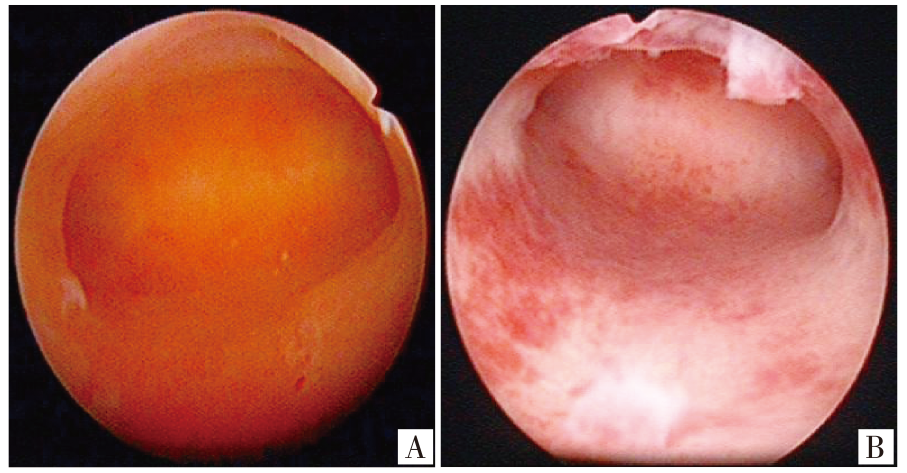


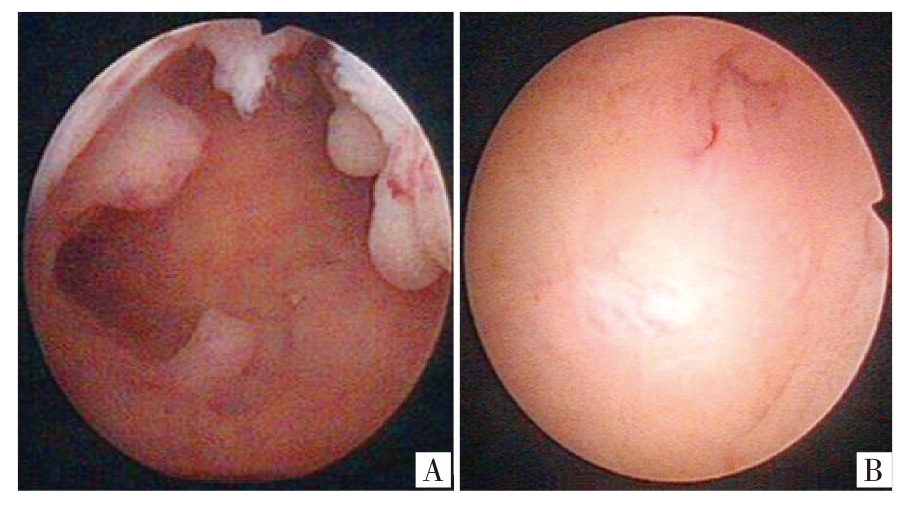
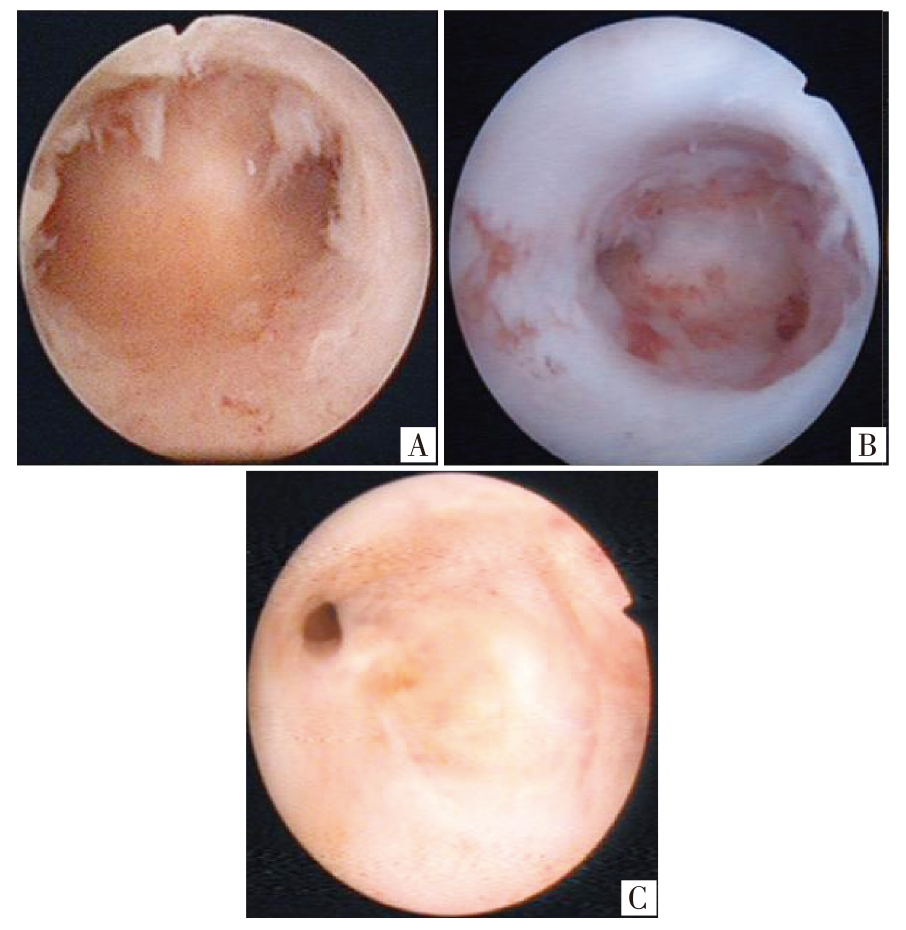
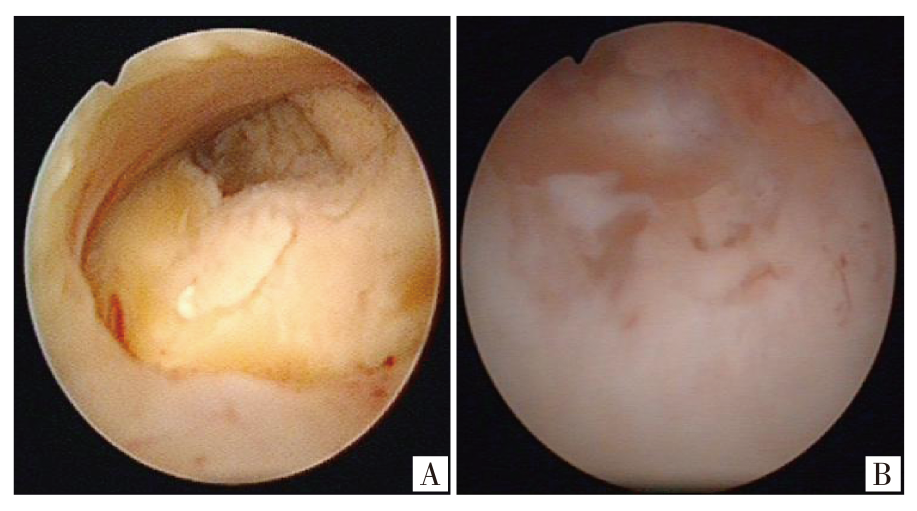
| [1] | 孔北华, 马丁, 段涛. 妇产科学[M]. 10版. 北京: 人民卫生出版社, 2024:254-257. |
| [2] | Sethi A, Bajaj B, Nair D, et al. Comparison of Conventional Methods with Newer Diagnostic Modalities to Detect Genital Tuberculosis in Infertile Women[J]. J Obstet Gynaecol India, 2022, 72(5):426-432. doi: 10.1007/s13224-022-01629-8. |
| [3] | 刘琳琳, 黄晓武, 夏恩兰. 子宫内膜结核的宫腔镜检查和组织病理学诊断分析[J]. 国际妇产科学杂志, 2018, 45(2):203-206. doi: 10.3969/j.issn.1674-1870.2018.02.021. |
| [4] |
The American Fertility Society classifications of adnexal adhesions, distal tubal occlusion, tubal occlusion secondary to tubal ligation, tubal pregnancies, müllerian anomalies and intrauterine adhesions[J]. Fertil Steril, 1988, 49(6):944-955. doi: 10.1016/s0015-0282(16)59942-7.
pmid: 3371491 |
| [5] | Kurman RJ, Ellenson LH, Ronnett BM. Blaustein女性生殖道病理学[M]. 薛德彬,译. 7版. 北京: 北京科学技术出版社, 2023:348-349. |
| [6] | Sharma JB, Sharma E, Sharma S, et al. Recent Advances in Diagnosis and Management of Female Genital Tuberculosis[J]. J Obstet Gynaecol India, 2021, 71(5):476-487. doi: 10.1007/s13224-021-01523-9. |
| [7] |
Kulshrestha V, Kriplani A, Agarwal N, et al. Genital tuberculosis among infertile women and fertility outcome after antitubercular therapy[J]. Int J Gynaecol Obstet, 2011, 113(3):229-234. doi: 10.1016/j.ijgo.2010.12.014.
pmid: 21457984 |
| [8] | Jindal UN, Verma S, Bala Y. Favorable infertility outcomes following anti-tubercular treatment prescribed on the sole basis of a positive polymerase chain reaction test for endometrial tuberculosis[J]. Hum Reprod, 2012, 27(5):1368-1374. doi: 10.1093/humrep/des076. |
| [9] | Kumar A, Kumar A. Endometrial tuberculosis[J]. J Am Assoc Gynecol Laparosc, 2004, 11(1):2. doi: 10.1016/s1074-3804(05)60002-3. |
| [10] | Kumar A, Kumar A. Unusual appearing tubercular deposits at hysteroscopy[J]. J Minim Invasive Gynecol, 2007, 14(2):144. doi: 10.1016/j.jmig.2006.09.021. |
| [11] |
Kumar A, Kumar A. Hysteroscopic findings of starry sky appearance and impregnated cobwebs in endometrial tuberculosis[J]. Int J Gynaecol Obstet, 2014, 126(3):280-281. doi: 10.1016/j.ijgo.2014.03.027.
pmid: 24890745 |
| [12] | Seror J, Faivre E, Prevot S, et al. Tuberculosis endometrial polyp[J]. Case Rep Obstet Gynecol, 2013, 2013:176124. doi: 10.1155/2013/176124. |
| [13] | Cicinelli E, Tinelli R, Colafiglio G, et al. Tubercular endometritis: a rare condition reliably detectable with fluid hysteroscopy[J]. J Minim Invasive Gynecol, 2008, 15(6):752-754. doi: 10.1016/j.jmig.2008.07.011. |
| [14] | Xu D, Xue M, Han X. Hysteroscopic images of early-stage endometrial tuberculosis[J]. Gynecol Surg, 2009, 6(1):51-52. doi: 10.1007/s10397-008-0438-2. |
| [15] | Korn AP, Ehrlich S. Images in infectious diseases in obstetrics and gynecology. Endometrial tuberculosis[J]. Infect Dis Obstet Gynecol, 2000, 8(3/4):118. doi: 10.1155/S1064744900000132. |
| [16] | Prado DS, Cardoso LF, de Maria RD Júnior, et al. Endometrial Tuberculosis: Hysteroscopic Findings of a Clinical Case[J]. Rev Bras Ginecol Obstet, 2019, 41(6):409-411. doi: 10.1055/s-0039-1692634. |
| [17] |
Sharma JB, Singh UB, Kriplani A, et al. Hysteroscopic observations in 348 consecutive cases of female genital tuberculosis: A prospective study[J]. Indian J Tuberc, 2022, 69(1):48-57. doi: 10.1016/j.ijtb.2021.02.010.
pmid: 35074151 |
| [18] | Mondal R, Jaiswal N, Bhave P, et al. Laparoscopic and hysteroscopic findings in women with sub-fertility and tuberculosis: A case series[J]. BJOG, 2024, 131(7):929-940. doi: 10.1111/1471-0528.17701. |
| [19] | Jiang J, Xu D, Yang Y. Hysteroscopic adhesiolysis and fertility outcomes of intrauterine adhesions due to endometrial tuberculosis[J]. Zhong Nan Da Xue Xue Bao Yi Xue Ban, 2025, 50(1):52-60. doi: 10.11817/j.issn.1672-7347.2025.240022. |
| [20] |
Bukulmez O, Yarali H, Gurgan T. Total corporal synechiae due to tuberculosis carry a very poor prognosis following hysteroscopic synechialysis[J]. Hum Reprod, 1999, 14(8):1960-1961. doi: 10.1093/humrep/14.8.1960.
pmid: 10438408 |
| [1] | QI Ge-le, QIAO Qiao, YU Cong-xiang. Analysis of the Application Prospects of Haptic Feedback in Hysteroscopy VR Simulation for Clinical Training [J]. Journal of International Obstetrics and Gynecology, 2026, 53(3): 347-351. |
| [2] | ZHANG Chun-jie, WU Li-xian, YANG Bo, LIU Zhi-jie, ZHENG Jing. A Case of Atypical McCune-Albright Syndrome in A Prepubertal Girl [J]. Journal of International Obstetrics and Gynecology, 2026, 53(2): 150-152. |
| [3] | LIU Xiao-xiao, NIU Yu-qin, DING Kun, CHEN Ya-xue. The Effect of Inositol Supplementation on Blood Glucose and Incidence of Gestational Diabetes Mellitus in Pregnant Women: A Meta-Analysis [J]. Journal of International Obstetrics and Gynecology, 2026, 53(2): 170-176. |
| [4] | YANG Xue, MA Ning, XIA En-lan, HUANG Xiao-wu. Pregnancy-Associated Enhanced Myometrial Vascularity: Two Cases Report [J]. Journal of International Obstetrics and Gynecology, 2026, 53(2): 184-187. |
| [5] | ZHANG Yan, SONG Shu-fang. Advances in the Application of DNA Methylation in Cervical Lesions [J]. Journal of International Obstetrics and Gynecology, 2026, 53(2): 206-210. |
| [6] | WANG Si-yao, LING Fei-fei, LI Hong-li, LIU Chang. A Case Report of Hypercalcemic Type Small Cell Carcinoma of the Fallopian Tube [J]. Journal of International Obstetrics and Gynecology, 2026, 53(2): 232-236. |
| [7] | ZHANG Huan-qin, YANG Wei-hua, GUO Yao-shan, LIANG Xiao-ju. Umbilical Vascular Thrombosis in Parturients: A Clinical Analysis of Six Cases [J]. Journal of International Obstetrics and Gynecology, 2026, 53(1): 108-112. |
| [8] | WANG Peng-yuan, YI Feng-xin, CHI Yun-qian, ZHANG Zi-han, WANG Yun-he, ZHANG Xing-ying, HAO Wei. Transient Neonatal Myasthenia Gravis of Maternal Origin: A Case Report [J]. Journal of International Obstetrics and Gynecology, 2026, 53(1): 117-120. |
| [9] | LI Na, LIU Hai-yan, TAN Li-li. Primary Ovarian Epithelioid Angiosarcoma:A Case Report [J]. Journal of International Obstetrics and Gynecology, 2026, 53(1): 22-26. |
| [10] | SUN Ren-lian, SI Cai-xia, CHENG Yue, WEI Min, XU Fei-xue. Benign Multicystic Peritoneal Mesothelioma: A Report of Two Cases [J]. Journal of International Obstetrics and Gynecology, 2026, 53(1): 38-42. |
| [11] | MA Xiao-tong, XUE Feng-xia. The Changes in the Reproductive Tract Microbiota during Female Pregnancy and Their Impact on Pregnancy Outcomes [J]. Journal of International Obstetrics and Gynecology, 2025, 52(6): 654-659. |
| [12] | JIN Hua, REN Yu, ZHAO Jing. The Guiding Value of Ultrasonic Monitoring Parameters in the First Stage of Labor for Maternal Delivery Modes [J]. Journal of International Obstetrics and Gynecology, 2025, 52(6): 668-671. |
| [13] | LIU Juan, TIAN Li-bin, YANG Yong, XU Xun-hua, LI Ling. Undifferentiated Uterine Sarcoma of the Cervix: A Case Report [J]. Journal of International Obstetrics and Gynecology, 2025, 52(6): 712-716. |
| [14] | LI Ya-nan, JIA Ning-rui, WEI Jie, XIAO Peng, JI Jian-wu, PAN Qiao-hong. Ultrasound Diagnosis of A Case of Mature Teratoma of the Placenta [J]. Journal of International Obstetrics and Gynecology, 2025, 52(5): 517-520. |
| [15] | DUAN Pu-chu, WANG Xiao-jian, ZHANG Yan-ling. Regulatory Mechanisms of Strontium Mediated Oxidative Stress during Pregnancy and Its Impacts on Maternal and Infant Health [J]. Journal of International Obstetrics and Gynecology, 2025, 52(5): 558-562. |
| Viewed | ||||||
|
Full text |
|
|||||
|
Abstract |
|
|||||
