
Journal of International Obstetrics and Gynecology ›› 2026, Vol. 53 ›› Issue (4): 468-473.doi: 10.12280/gjfckx.20251306
• Obstetric Physiology & Obstetric Disease:Original Article • Previous Articles Next Articles
PENG Jing, LI Tian-jing, ZHANG Shu-yi, CHEN Miao-miao( )
)
Received:2025-11-25
Published:2026-08-15
Online:2026-08-25
Contact:
CHEN Miao-miao
E-mail:229312094@qq.com
PENG Jing, LI Tian-jing, ZHANG Shu-yi, CHEN Miao-miao. Reactive Oxygen Species Induce Mitochondrial Dysfunction and Inhibit Epithelial-Mesenchymal Transition in Trophoblasts in Preeclampsia[J]. Journal of International Obstetrics and Gynecology, 2026, 53(4): 468-473.
Add to citation manager EndNote|Ris|BibTeX
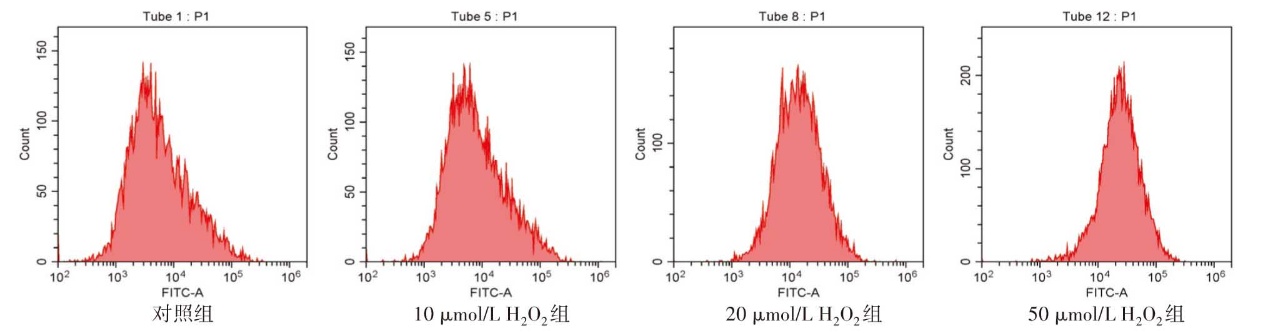
| 组别 | n | ROS荧光强度 |
|---|---|---|
| 对照组 | 3 | 13 381.470±972.958 |
| 10 μmol/L H2O2组 | 3 | 16 353.533±792.802a |
| 20 μmol/L H2O2组 | 3 | 21 033.767±680.448ab |
| 50 μmol/L H2O2组 | 3 | 29 746.773±1 664.742abc |
| F | 127.332 | |
| P | <0.001 |
| 组别 | n | ROS荧光强度 |
|---|---|---|
| 对照组 | 3 | 13 381.470±972.958 |
| 10 μmol/L H2O2组 | 3 | 16 353.533±792.802a |
| 20 μmol/L H2O2组 | 3 | 21 033.767±680.448ab |
| 50 μmol/L H2O2组 | 3 | 29 746.773±1 664.742abc |
| F | 127.332 | |
| P | <0.001 |
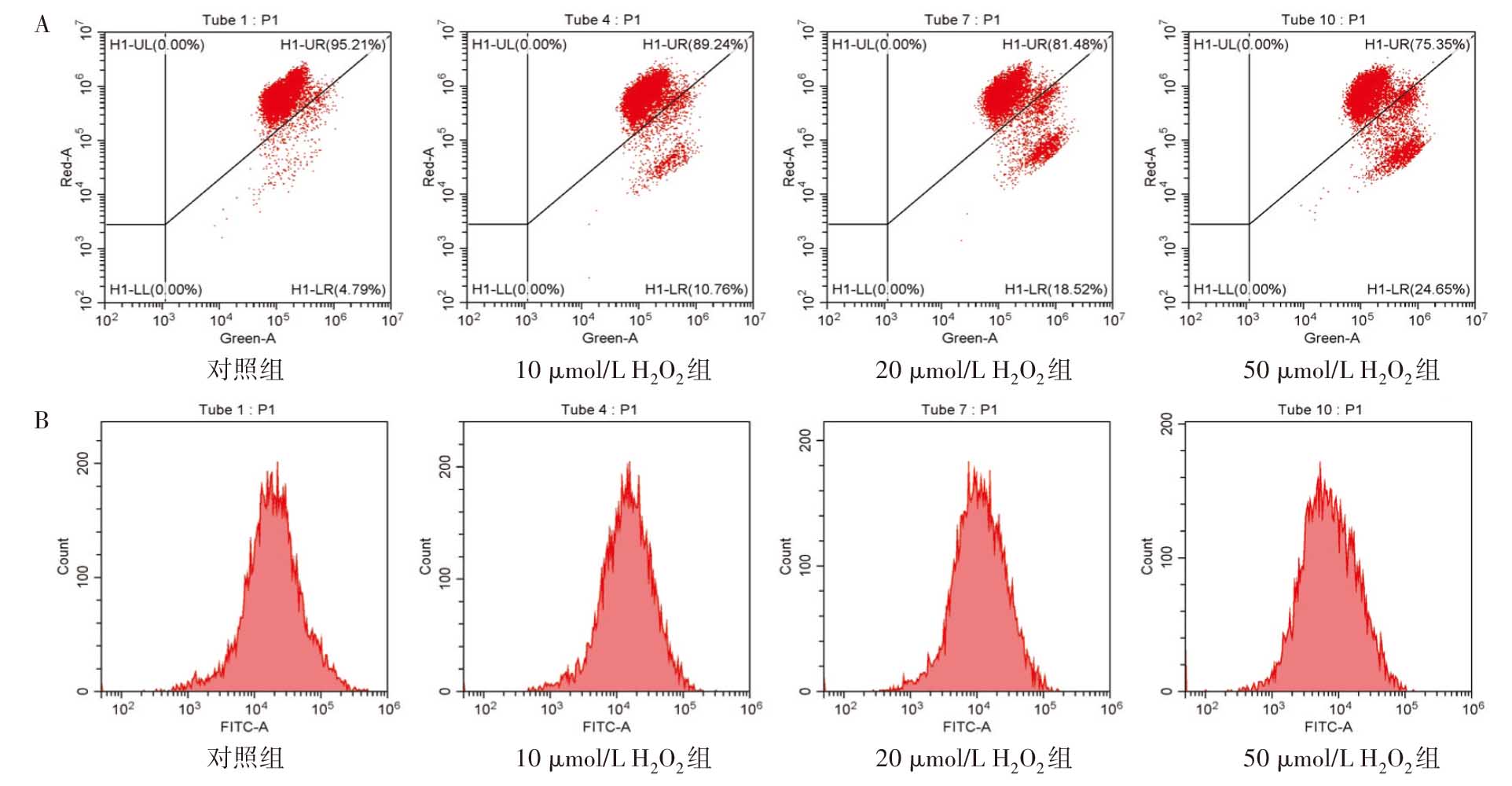
| 组别 | n | 线粒体膜电位荧光比值 | MPTP荧光强度 |
|---|---|---|---|
| 对照组 | 3 | 0.052±0.009 | 30 531.933±471.537 |
| 10 μmol/L H2O2组 | 3 | 0.140±0.019a | 20 716.267±1 049.623a |
| 20 μmol/L H2O2组 | 3 | 0.250±0.025ab | 16 585.467±873.578ab |
| 50 μmol/L H2O2组 | 3 | 0.343±0.021abc | 12 030.560±972.318abc |
| F | 124.271 | 246.127 | |
| P | <0.001 | <0.001 |
| 组别 | n | 线粒体膜电位荧光比值 | MPTP荧光强度 |
|---|---|---|---|
| 对照组 | 3 | 0.052±0.009 | 30 531.933±471.537 |
| 10 μmol/L H2O2组 | 3 | 0.140±0.019a | 20 716.267±1 049.623a |
| 20 μmol/L H2O2组 | 3 | 0.250±0.025ab | 16 585.467±873.578ab |
| 50 μmol/L H2O2组 | 3 | 0.343±0.021abc | 12 030.560±972.318abc |
| F | 124.271 | 246.127 | |
| P | <0.001 | <0.001 |
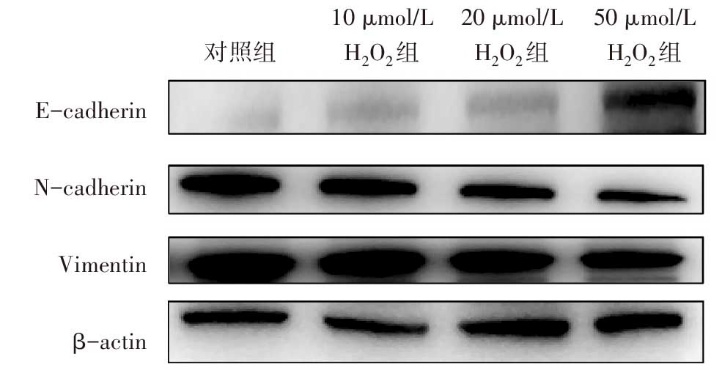
| 组别 | n | E-cadherin | N-cadherin | Vimentin |
|---|---|---|---|---|
| 对照组 | 3 | 0.358±0.013 | 1.984±0.007 | 2.882±0.003 |
| 10 μmol/L H2O2组 | 3 | 0.547±0.005a | 1.950±0.010a | 2.851±0.012a |
| 20 μmol/L H2O2组 | 3 | 0.576±0.070a | 1.916±0.005ab | 2.711±0.011ab |
| 50 μmol/L H2O2组 | 3 | 0.913±0.120abc | 1.655±0.005abc | 2.378±0.017abc |
| F | 43.395 | 1 267.1 | 1 183.6 | |
| P | <0.001 | <0.001 | <0.001 |
| 组别 | n | E-cadherin | N-cadherin | Vimentin |
|---|---|---|---|---|
| 对照组 | 3 | 0.358±0.013 | 1.984±0.007 | 2.882±0.003 |
| 10 μmol/L H2O2组 | 3 | 0.547±0.005a | 1.950±0.010a | 2.851±0.012a |
| 20 μmol/L H2O2组 | 3 | 0.576±0.070a | 1.916±0.005ab | 2.711±0.011ab |
| 50 μmol/L H2O2组 | 3 | 0.913±0.120abc | 1.655±0.005abc | 2.378±0.017abc |
| F | 43.395 | 1 267.1 | 1 183.6 | |
| P | <0.001 | <0.001 | <0.001 |
| [1] |
Chandra M, Paray AA. Natural Physiological Changes During Pregnancy[J]. Yale J Biol Med, 2024, 97(1):85-92. doi: 10.59249/JTIV4138.
pmid: 38559455 |
| [2] | Grzeszczak K, Łanocha-Arendarczyk N, Malinowski W, et al. Oxidative Stress in Pregnancy[J]. Biomolecules, 2023, 13(12):1768. doi: 10.3390/biom13121768. |
| [3] |
Romero R, Dey SK, Fisher SJ. Preterm labor: one syndrome, many causes[J]. Science, 2014, 345(6198):760-765. doi: 10.1126/science.1251816.
pmid: 25124429 |
| [4] | Bolat Erdogan H, Gül K, Sahutoglu T, et al. Oxidative stress, antioxidant capacity, and cardiovascular risk in patients with non-functioning adrenal incidentalomas[J]. Endocr Connect, 2025, 14(7):e250259. doi: 10.1530/EC-25-0259. |
| [5] | Reale SC, Camann WR. Preeclampsia[J]. N Engl J Med, 2022, 387(3):286-287. doi: 10.1056/NEJMc2207559. |
| [6] | Redman C, Staff AC, Roberts JM. Syncytiotrophoblast stress in preeclampsia: the convergence point for multiple pathways[J]. Am J Obstet Gynecol, 2022, 226(2S):S907-S927. doi: 10.1016/j.ajog.2020.09.047. |
| [7] | Shu C, Xu P, Han J, et al. Upregulation of circRNA hsa_circ_0008726 in Pre-eclampsia Inhibits Trophoblast Migration, Invasion, and EMT by Regulating miR-345-3p/RYBP Axis[J]. Reprod Sci, 2022, 29(10):2829-2841. doi: 10.1007/s43032-021-00804-y. |
| [8] |
Torres-Cuevas I, Parra-Llorca A, Sánchez-Illana A, et al. Oxygen and oxidative stress in the perinatal period[J]. Redox Biol, 2017, 12:674-681. doi: 10.1016/j.redox.2017.03.011.
pmid: 28395175 |
| [9] | Parapob N, Luewan S, Kamlungkuea T, et al. Oxidative Stress in Pathogenesis of Preeclampsia: Mechanistic and Clinical Insights[J]. Antioxidants(Basel), 2026, 15(3):387. doi: 10.3390/antiox15030387. |
| [10] |
Alves P, Fragoso M, Tenório M, et al. The role played by oral antioxidant therapies in preventing and treating preeclampsia: An updated meta-analysis[J]. Nutr Metab Cardiovasc Dis, 2023, 33(7):1277-1292. doi: 10.1016/j.numecd.2023.02.003.
pmid: 37246073 |
| [11] | Benevides FT, Fonsêca da Silva FL, de Oliveira DL, et al. Zinc, antioxidant enzymes in preeclampsia, and association with newborn outcome[J]. J Trace Elem Med Biol, 2024, 85:127471. doi: 10.1016/j.jtemb.2024.127471. |
| [12] | Lu X, Wang Y, Geng N, et al. Dysregulated Mitochondrial Calcium Causes Spiral Artery Remodeling Failure in Preeclampsia[J]. Hypertension, 2024, 81(11):2368-2382. doi: 10.1161/HYPERTENSIONAHA.124.23046. |
| [13] | 谢杏苗, 黄永军, 冯璐, 等. MTSS1基因对骨肉瘤细胞增殖、迁移和侵袭的影响及机制研究[J]. 现代医院, 2019, 19(8):1179-1184. doi: 10.3969/j.issn.1671-332X.2019.08.025. |
| [14] |
Hernansanz-Agustín P, Ramos E, Navarro E, et al. Mitochondrial complex I deactivation is related to superoxide production in acute hypoxia[J]. Redox Biol, 2017, 12:1040-1051. doi: 10.1016/j.redox.2017.04.025.
pmid: 28511347 |
| [15] |
Holland O, Dekker Nitert M, Gallo LA, et al. Review: Placental mitochondrial function and structure in gestational disorders[J]. Placenta, 2017, 54:2-9. doi: 10.1016/j.placenta.2016.12.012.
pmid: 28024805 |
| [16] | Jahan F, Vasam G, Green AE, et al. Placental Mitochondrial Function and Dysfunction in Preeclampsia[J]. Int J Mol Sci, 2023, 24(4):4177. doi: 10.3390/ijms24044177. |
| [17] | Baev AY, Vinokurov AY, Potapova EV, et al. Mitochondrial Permeability Transition, Cell Death and Neurodegeneration[J]. Cells, 2024, 13(7):648. doi: 10.3390/cells13070648. |
| [18] | Hu XQ, Zhang L. Mitochondrial Dysfunction in the Pathogenesis of Preeclampsia[J]. Curr Hypertens Rep, 2022, 24(6):157-172. doi: 10.1007/s11906-022-01184-7. |
| [19] | Wu CC, Bratton SB. Regulation of the intrinsic apoptosis pathway by reactive oxygen species[J]. Antioxid Redox Signal, 2013, 19(6):546-558. doi: 10.1089/ars.2012.4905. |
| [20] | Patel P, Mendoza A, Robichaux DJ, et al. Inhibition of the Anti-Apoptotic Bcl-2 Family by BH3 Mimetics Sensitize the Mitochondrial Permeability Transition Pore Through Bax and Bak[J]. Front Cell Dev Biol, 2021, 9:765973. doi: 10.3389/fcell.2021.765973. |
| [21] | Bayramoğlu Z, Özler S. Is the expression of placental epithelial and lymphoid markers associated with the perinatal outcomes in preeclampsia?[J]. Ginekol Pol, 2023, 94(11):929. doi: 10.5603/GP.a2023.0027. |
| [22] | Zhang J, Chen WQ, Yang K, et al. RBM25 induces trophoblast epithelial-mesenchymal transition and preeclampsia disorder by enhancing the positive feedback loop between Grhl2 and RBM25[J]. Exp Biol Med(Maywood), 2023, 248(14):1267-1277. doi: 10.1177/15353702231191199. |
| [1] | HANG Yu-jie, OU Si-yi, GAO Shan. Research Progress on Potential Biomarkers and Targets for Pelvic Organ Prolapse [J]. Journal of International Obstetrics and Gynecology, 2026, 53(4): 418-423. |
| [2] | WANG Jun, ZHU Jing-lei, PU Rui-yang, LI Shui-li, SUN Xiao-tong. Mechanisms of Oxidative Stress Impact on Protein Post-Translational Modifications in Preeclampsia [J]. Journal of International Obstetrics and Gynecology, 2026, 53(4): 447-451. |
| [3] | HUANG Chun, FU Hai-yu, GUAN Ling, YANG Pei-xian. Partial Hydatidiform Mole Complicated with Severe Preeclampsia in An Adolescent [J]. Journal of International Obstetrics and Gynecology, 2026, 53(4): 478-480. |
| [4] | CAO Ru, HE Bi-wei, YANG Xing-yu, LIANG Shu-zhen, CHENG Wei-wei. The Role of Chemokines and Their Receptors in the Pathogenesis of Preeclampsia [J]. Journal of International Obstetrics and Gynecology, 2026, 53(3): 241-248. |
| [5] | REN Yu-xi, HU Li-yan, REN Yan-xu. Research Progress on Nrf2 and Oxidative Stress in Preeclampsia [J]. Journal of International Obstetrics and Gynecology, 2026, 53(1): 89-92. |
| [6] | CHEN Yang, ZHANG Guo-ying. Research Progress on the Correlation between Serum Uric Acid Level and Preeclampsia [J]. Journal of International Obstetrics and Gynecology, 2025, 52(6): 638-642. |
| [7] | WANG Xin-yi, ZHU Cai-xia. Effects of Myeloid-Derived Suppressor Cells on Normal Pregnancy and Pathological Pregnancy [J]. Journal of International Obstetrics and Gynecology, 2025, 52(6): 649-653. |
| [8] | LIU Jian-hui, YIN Cheng-hong, LIU Rui-xia, SU Shao-fei, ZHU Hui-ping, XIE Shuang-hua, ZHANG En-jie. Association between Preeclampsia and the Occurrence of Congenital Heart Disease in Offspring: A Prospective Study Based on the Chinese Birth Cohort from 2018 to 2022 [J]. Journal of International Obstetrics and Gynecology, 2025, 52(6): 664-667. |
| [9] | SHEN Qian-qian, ZHANG Nian-fang, ZHAO Xue-piao. Construction and Validation of A Nomogram Risk Prediction Model for Pre-Eclampsia Complicating Elderly Pregnant Women [J]. Journal of International Obstetrics and Gynecology, 2025, 52(5): 567-573. |
| [10] | CHEN Yi-bing, TU Jing-yan, TANG Yi-ming, LIN Xiao-yang, LIU Yan-duo, HAN Qing. Research Progress on Serum Iron and Ferroptosis in Preeclampsia [J]. Journal of International Obstetrics and Gynecology, 2025, 52(4): 361-365. |
| [11] | YANG Yao-yao, WANG Yong-hong. Research Progress on the Mechanism of Autophagy in the Pathogenesis of Preeclampsia and Related Treatments [J]. Journal of International Obstetrics and Gynecology, 2025, 52(4): 366-370. |
| [12] | REN Sheng, WANG Yong-hong. The Role of Thrombospondin-1 in the Pathogenesis of Preeclampsia [J]. Journal of International Obstetrics and Gynecology, 2025, 52(3): 275-279. |
| [13] | QIN Xiao-pei, ZHOU Qi. Research Progress on Non-Pharmacological and Pharmacological Prevention of Preeclampsia [J]. Journal of International Obstetrics and Gynecology, 2025, 52(3): 280-285. |
| [14] | MA Ling, LI Ya-xi, ZHAO Min, WANG Jing, LI Hong-li. Progress on the Relationship between Apoptosis and Adverse Pregnancy Outcomes [J]. Journal of International Obstetrics and Gynecology, 2025, 52(2): 121-126. |
| [15] | YANG Yang, MA Yuan, CHEN You-yi, ZHAO Jing, MA Wen-juan. The Effect of Serum Exosomes from Patients with Severe Preeclampsia on the Function of Normal Decidual Immune Cells in Humans [J]. Journal of International Obstetrics and Gynecology, 2025, 52(2): 143-152. |
| Viewed | ||||||
|
Full text |
|
|||||
|
Abstract |
|
|||||
