
Journal of International Obstetrics and Gynecology ›› 2026, Vol. 53 ›› Issue (5): 530-535.doi: 10.12280/gjfckx.20251315
• Obstetric Physiology & Obstetric Disease:Original Article • Previous Articles Next Articles
WANG Ting, GUAN Biao, ZHANG Hui-juan
Received:2025-11-26
Published:2026-10-15
Online:2026-10-26
WANG Ting, GUAN Biao, ZHANG Hui-juan. Analysis of Influencing Factors for Adverse Fetal Outcomes in Preeclampsia Based on Competing Risk Model and Construction of A Nomogram Model[J]. Journal of International Obstetrics and Gynecology, 2026, 53(5): 530-535.
Add to citation manager EndNote|Ris|BibTeX
| 变量 | 目标事件(n=128) | 竞争事件(n=30) | 删失事件(n=180) | χ2或F | P |
|---|---|---|---|---|---|
| 年龄(岁) | 33.18±6.88 | 32.67±6.74 | 31.51±5.52 | 2.807 | 0.062 |
| 妊娠前BMI(kg/m2) | 24.53±2.85 | 24.17±2.66 | 23.82±2.51 | 2.751 | 0.056 |
| 产妇类型 | |||||
| 初产妇 | 42(32.81) | 11(36.67) | 61(33.89) | 0.166 | 0.920 |
| 经产妇 | 86(67.19) | 19(63.33) | 119(66.11) | ||
| 孕次(次) | 2.28±0.45 | 2.17±0.38 | 2.19±0.40 | 1.942 | 0.145 |
| 不良孕产史 | 16(12.50) | 3(10.00) | 13(7.22) | 2.442 | 0.295 |
| 发病孕周(周) | 31.15±3.28 | 32.67±3.07 | 33.94±3.96 | 21.952 | <0.001 |
| 临床症状数量 | |||||
| 0个 | 87(67.97) | 22(73.33) | 136(75.56) | 2.988 | 0.560 |
| 1个 | 24(18.75) | 5(16.67) | 22(12.22) | ||
| ≥2个 | 17(13.28) | 3(10.00) | 22(12.22) | ||
| 妊娠期并发症 | |||||
| 妊娠期贫血 | 23(17.97) | 8(26.67) | 28(15.56) | 2.241 | 0.326 |
| 妊娠期糖尿病 | 21(16.41) | 6(20.00) | 24(13.33) | 1.171 | 0.557 |
| 妊娠期甲状腺功能减退 | 15(11.72) | 6(20.00) | 15(8.33) | 3.925 | 0.141 |
| 脐动脉血流异常 | 35(27.34) | 3(10.00) | 12(6.67) | 25.974 | <0.001 |
| SBP(mmHg) | 142.15±20.16 | 139.70±22.30 | 137.19±18.64 | 2.405 | 0.092 |
| DBP(mmHg) | 82.15±15.63 | 80.70±14.28 | 78.54±14.77 | 2.174 | 0.115 |
| Alb(g) | 29.07±6.55 | 35.62±6.17 | 36.54±6.83 | 48.331 | <0.001 |
| Hb(g/L) | 110.25±10.12 | 111.73±11.28 | 112.85±12.03 | 1.975 | 0.140 |
| UA(μmol/L) | 420.15±85.33 | 408.18±76.92 | 397.20±93.03 | 2.499 | 0.084 |
| Scr(μmol/L) | 65.82±15.96 | 63.17±13.84 | 62.15±14.28 | 2.284 | 0.103 |
| 24 h尿蛋白定量(g) | 3.94±0.62 | 3.55±0.58 | 3.47±0.59 | 23.511 | <0.001 |
| BUN(mmol/L) | 5.05±0.95 | 4.92±0.83 | 4.83±0.93 | 2.206 | 0.122 |
| Fib(g/L) | 4.21±0.73 | 4.15±0.65 | 4.07±0.69 | 1.594 | 0.205 |
| D-D(mg/L) | 4.21±0.83 | 3.82±0.75 | 3.69±0.69 | 17.506 | <0.001 |
| PLT(×109/L) | 205.35±38.96 | 199.36±40.28 | 195.64±42.67 | 2.089 | 0.125 |
| LDH(U/L) | 264.39±46.88 | 248.69±42.75 | 232.83±40.79 | 19.856 | <0.001 |
| TBIL(μmol/L) | 9.35±1.85 | 8.66±1.64 | 8.23±1.55 | 16.429 | <0.001 |
| ALT(U/L) | 32.85±5.67 | 33.26±6.01 | 34.08±6.27 | 1.591 | 0.205 |
| AST(U/L) | 35.02±2.13 | 34.71±2.68 | 34.85±2.47 | 0.326 | 0.722 |
| Ca2+(μmol/L) | 2.16±0.16 | 2.14±0.15 | 2.13±0.16 | 1.335 | 0.265 |
| 变量 | 目标事件(n=128) | 竞争事件(n=30) | 删失事件(n=180) | χ2或F | P |
|---|---|---|---|---|---|
| 年龄(岁) | 33.18±6.88 | 32.67±6.74 | 31.51±5.52 | 2.807 | 0.062 |
| 妊娠前BMI(kg/m2) | 24.53±2.85 | 24.17±2.66 | 23.82±2.51 | 2.751 | 0.056 |
| 产妇类型 | |||||
| 初产妇 | 42(32.81) | 11(36.67) | 61(33.89) | 0.166 | 0.920 |
| 经产妇 | 86(67.19) | 19(63.33) | 119(66.11) | ||
| 孕次(次) | 2.28±0.45 | 2.17±0.38 | 2.19±0.40 | 1.942 | 0.145 |
| 不良孕产史 | 16(12.50) | 3(10.00) | 13(7.22) | 2.442 | 0.295 |
| 发病孕周(周) | 31.15±3.28 | 32.67±3.07 | 33.94±3.96 | 21.952 | <0.001 |
| 临床症状数量 | |||||
| 0个 | 87(67.97) | 22(73.33) | 136(75.56) | 2.988 | 0.560 |
| 1个 | 24(18.75) | 5(16.67) | 22(12.22) | ||
| ≥2个 | 17(13.28) | 3(10.00) | 22(12.22) | ||
| 妊娠期并发症 | |||||
| 妊娠期贫血 | 23(17.97) | 8(26.67) | 28(15.56) | 2.241 | 0.326 |
| 妊娠期糖尿病 | 21(16.41) | 6(20.00) | 24(13.33) | 1.171 | 0.557 |
| 妊娠期甲状腺功能减退 | 15(11.72) | 6(20.00) | 15(8.33) | 3.925 | 0.141 |
| 脐动脉血流异常 | 35(27.34) | 3(10.00) | 12(6.67) | 25.974 | <0.001 |
| SBP(mmHg) | 142.15±20.16 | 139.70±22.30 | 137.19±18.64 | 2.405 | 0.092 |
| DBP(mmHg) | 82.15±15.63 | 80.70±14.28 | 78.54±14.77 | 2.174 | 0.115 |
| Alb(g) | 29.07±6.55 | 35.62±6.17 | 36.54±6.83 | 48.331 | <0.001 |
| Hb(g/L) | 110.25±10.12 | 111.73±11.28 | 112.85±12.03 | 1.975 | 0.140 |
| UA(μmol/L) | 420.15±85.33 | 408.18±76.92 | 397.20±93.03 | 2.499 | 0.084 |
| Scr(μmol/L) | 65.82±15.96 | 63.17±13.84 | 62.15±14.28 | 2.284 | 0.103 |
| 24 h尿蛋白定量(g) | 3.94±0.62 | 3.55±0.58 | 3.47±0.59 | 23.511 | <0.001 |
| BUN(mmol/L) | 5.05±0.95 | 4.92±0.83 | 4.83±0.93 | 2.206 | 0.122 |
| Fib(g/L) | 4.21±0.73 | 4.15±0.65 | 4.07±0.69 | 1.594 | 0.205 |
| D-D(mg/L) | 4.21±0.83 | 3.82±0.75 | 3.69±0.69 | 17.506 | <0.001 |
| PLT(×109/L) | 205.35±38.96 | 199.36±40.28 | 195.64±42.67 | 2.089 | 0.125 |
| LDH(U/L) | 264.39±46.88 | 248.69±42.75 | 232.83±40.79 | 19.856 | <0.001 |
| TBIL(μmol/L) | 9.35±1.85 | 8.66±1.64 | 8.23±1.55 | 16.429 | <0.001 |
| ALT(U/L) | 32.85±5.67 | 33.26±6.01 | 34.08±6.27 | 1.591 | 0.205 |
| AST(U/L) | 35.02±2.13 | 34.71±2.68 | 34.85±2.47 | 0.326 | 0.722 |
| Ca2+(μmol/L) | 2.16±0.16 | 2.14±0.15 | 2.13±0.16 | 1.335 | 0.265 |
| 变量 | B | Z | P | HR | 95%CI |
|---|---|---|---|---|---|
| 年龄 | 0.911 | 1.247 | 0.264 | 2.487 | 0.941~6.574 |
| 妊娠前BMI | 0.825 | 2.811 | 0.094 | 2.282 | 0.812~6.410 |
| 产妇类型 | 0.199 | 2.219 | 0.136 | 1.220 | 0.849~1.753 |
| 孕次 | 0.541 | 0.967 | 0.325 | 1.718 | 0.941~3.135 |
| 不良孕产史 | 0.308 | 2.272 | 0.132 | 1.361 | 0.774~2.393 |
| 发病孕周 | 1.126 | 9.517 | 0.002 | 3.083 | 1.508~6.305 |
| 临床症状数量 | 0.228 | 2.343 | 0.126 | 1.256 | 0.911~1.732 |
| 妊娠期贫血 | 0.259 | 2.589 | 0.108 | 1.296 | 0.960~1.749 |
| 妊娠期糖尿病 | 0.241 | 1.368 | 0.242 | 1.273 | 0.950~1.704 |
| 妊娠期甲状腺功能减退 | 0.432 | 2.057 | 0.151 | 1.540 | 0.709~3.347 |
| 脐动脉血流异常 | 1.221 | 13.137 | <0.001 | 3.391 | 1.752~6.563 |
| SBP | 0.779 | 3.099 | 0.078 | 2.179 | 0.909~5.223 |
| DBP | 0.653 | 0.372 | 0.542 | 1.921 | 0.938~3.937 |
| Alb | 1.258 | 14.983 | <0.001 | 3.518 | 1.861~6.653 |
| Hb | 0.448 | 1.818 | 0.178 | 1.565 | 0.712~3.442 |
| UA | 0.847 | 2.858 | 0.154 | 2.333 | 0.874~5.227 |
| Scr | 0.714 | 0.676 | 0.411 | 2.042 | 0.920~4.535 |
| 24 h尿蛋白定量 | 1.174 | 19.190 | <0.001 | 3.235 | 1.913~5.470 |
| BUN | 0.622 | 1.199 | 0.274 | 1.863 | 0.947~3.663 |
| Fib | 0.324 | 1.595 | 0.207 | 1.383 | 0.808~2.366 |
| D-D | 1.052 | 11.225 | 0.001 | 2.863 | 1.547~5.299 |
| PLT | 0.584 | 3.196 | 0.074 | 1.793 | 0.838~3.836 |
| LDH | 1.093 | 9.587 | 0.002 | 2.983 | 1.493~5.959 |
| TBIL | 0.938 | 8.178 | 0.004 | 2.555 | 1.343~4.859 |
| ALT | 0.415 | 2.672 | 0.102 | 1.514 | 0.712~3.220 |
| AST | 0.217 | 1.707 | 0.191 | 1.242 | 0.988~1.563 |
| Ca2+ | 0.315 | 1.368 | 0.242 | 1.370 | 0.830~2.263 |
| 变量 | B | Z | P | HR | 95%CI |
|---|---|---|---|---|---|
| 年龄 | 0.911 | 1.247 | 0.264 | 2.487 | 0.941~6.574 |
| 妊娠前BMI | 0.825 | 2.811 | 0.094 | 2.282 | 0.812~6.410 |
| 产妇类型 | 0.199 | 2.219 | 0.136 | 1.220 | 0.849~1.753 |
| 孕次 | 0.541 | 0.967 | 0.325 | 1.718 | 0.941~3.135 |
| 不良孕产史 | 0.308 | 2.272 | 0.132 | 1.361 | 0.774~2.393 |
| 发病孕周 | 1.126 | 9.517 | 0.002 | 3.083 | 1.508~6.305 |
| 临床症状数量 | 0.228 | 2.343 | 0.126 | 1.256 | 0.911~1.732 |
| 妊娠期贫血 | 0.259 | 2.589 | 0.108 | 1.296 | 0.960~1.749 |
| 妊娠期糖尿病 | 0.241 | 1.368 | 0.242 | 1.273 | 0.950~1.704 |
| 妊娠期甲状腺功能减退 | 0.432 | 2.057 | 0.151 | 1.540 | 0.709~3.347 |
| 脐动脉血流异常 | 1.221 | 13.137 | <0.001 | 3.391 | 1.752~6.563 |
| SBP | 0.779 | 3.099 | 0.078 | 2.179 | 0.909~5.223 |
| DBP | 0.653 | 0.372 | 0.542 | 1.921 | 0.938~3.937 |
| Alb | 1.258 | 14.983 | <0.001 | 3.518 | 1.861~6.653 |
| Hb | 0.448 | 1.818 | 0.178 | 1.565 | 0.712~3.442 |
| UA | 0.847 | 2.858 | 0.154 | 2.333 | 0.874~5.227 |
| Scr | 0.714 | 0.676 | 0.411 | 2.042 | 0.920~4.535 |
| 24 h尿蛋白定量 | 1.174 | 19.190 | <0.001 | 3.235 | 1.913~5.470 |
| BUN | 0.622 | 1.199 | 0.274 | 1.863 | 0.947~3.663 |
| Fib | 0.324 | 1.595 | 0.207 | 1.383 | 0.808~2.366 |
| D-D | 1.052 | 11.225 | 0.001 | 2.863 | 1.547~5.299 |
| PLT | 0.584 | 3.196 | 0.074 | 1.793 | 0.838~3.836 |
| LDH | 1.093 | 9.587 | 0.002 | 2.983 | 1.493~5.959 |
| TBIL | 0.938 | 8.178 | 0.004 | 2.555 | 1.343~4.859 |
| ALT | 0.415 | 2.672 | 0.102 | 1.514 | 0.712~3.220 |
| AST | 0.217 | 1.707 | 0.191 | 1.242 | 0.988~1.563 |
| Ca2+ | 0.315 | 1.368 | 0.242 | 1.370 | 0.830~2.263 |
| 变量 | B | Z | P | HR | 95%CI |
|---|---|---|---|---|---|
| 发病孕周 | -0.496 | 6.674 | 0.010 | 0.609 | 0.418~0.887 |
| 脐动脉血流异常 | 1.185 | 6.724 | 0.009 | 3.271 | 1.335~8.010 |
| Alb | -0.462 | 6.236 | 0.013 | 0.630 | 0.438~0.905 |
| 24 h尿蛋白定量 | 1.097 | 7.265 | 0.006 | 2.995 | 1.349~6.651 |
| D-D | 0.837 | 4.877 | 0.027 | 2.309 | 1.099~4.854 |
| LDH | 0.973 | 5.772 | 0.017 | 2.646 | 1.196~5.852 |
| TBIL | 0.741 | 4.077 | 0.042 | 2.098 | 1.022~4.307 |
| 变量 | B | Z | P | HR | 95%CI |
|---|---|---|---|---|---|
| 发病孕周 | -0.496 | 6.674 | 0.010 | 0.609 | 0.418~0.887 |
| 脐动脉血流异常 | 1.185 | 6.724 | 0.009 | 3.271 | 1.335~8.010 |
| Alb | -0.462 | 6.236 | 0.013 | 0.630 | 0.438~0.905 |
| 24 h尿蛋白定量 | 1.097 | 7.265 | 0.006 | 2.995 | 1.349~6.651 |
| D-D | 0.837 | 4.877 | 0.027 | 2.309 | 1.099~4.854 |
| LDH | 0.973 | 5.772 | 0.017 | 2.646 | 1.196~5.852 |
| TBIL | 0.741 | 4.077 | 0.042 | 2.098 | 1.022~4.307 |
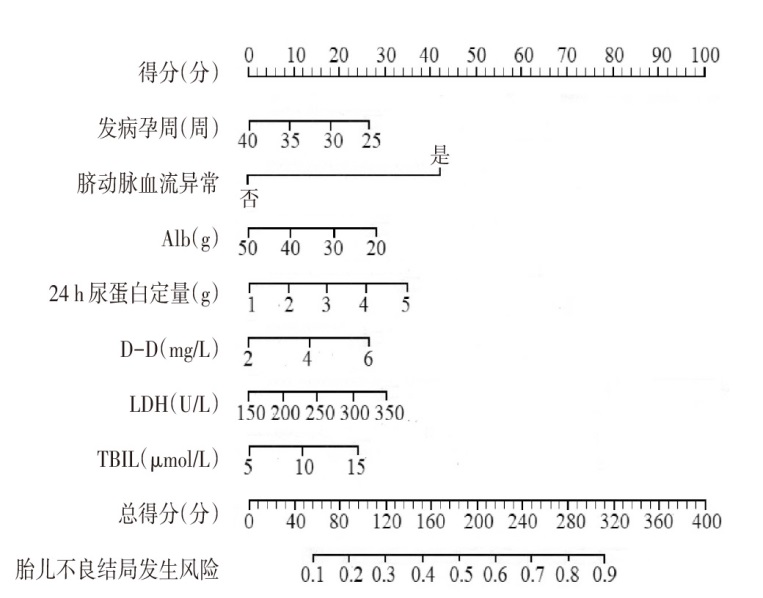
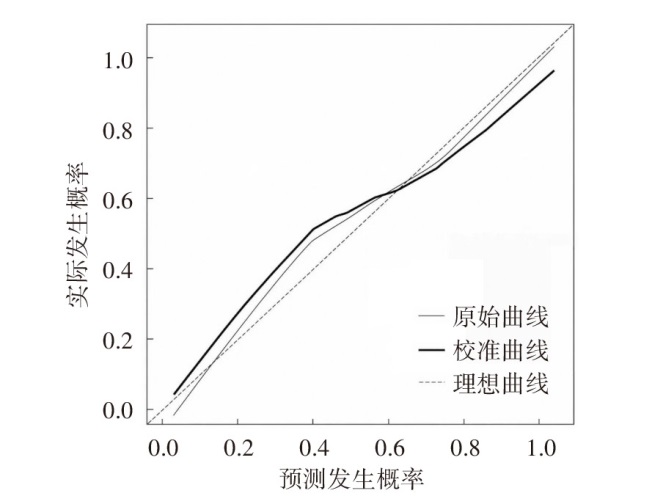
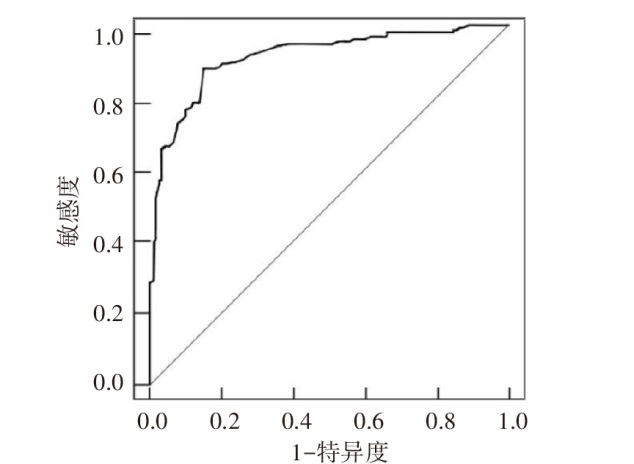
| [1] |
Ives CW, Sinkey R, Rajapreyar I, et al. Preeclampsia-Pathophysiology and Clinical Presentations: JACC State-of-the-Art Review[J]. J Am Coll Cardiol, 2020, 76(14):1690-1702. doi: 10.1016/j.jacc.2020.08.014.
pmid: 33004135 |
| [2] | Turbeville HR, Sasser JM. Preeclampsia beyond pregnancy: long-term consequences for mother and child[J]. Am J Physiol Renal Physiol, 2020, 318(6):F1315-F1326. doi: 10.1152/ajprenal.00071.2020. |
| [3] | 彭翠, 佘芹, 成志, 等. 子痫前期的母婴不良妊娠结局影响因素分析[J]. 重庆医学, 2022, 51(11):1895-1901. doi: 10.3969/j.issn.1671-8348.2022.11.019. |
| [4] | 陈万国, 钟静, 孙桂琴, 等. 子痫前期孕妇妊娠结局的影响因素分析[J]. 中国妇幼保健, 2021, 36(2):270-272. doi: 10.19829/j.zgfybj.issn.1001-4411.2021.02.009. |
| [5] |
Livingstone SJ, Guthrie B, McMinn M, et al. Derivation and validation of the CFracture competing risk fracture prediction tool compared with QFracture in older people and people with comorbidity: a population cohort study[J]. Lancet Healthy Longev, 2023, 4(1):e43-e53. doi: 10.1016/S2666-7568(22)00290-2.
pmid: 36610448 |
| [6] | 中华医学会妇产科学分会妊娠期高血压疾病学组. 妊娠期高血压疾病诊治指南(2020)[J]. 中华妇产科杂志, 2020, 55(4):227-238. doi: 10.3760/cma.j.cn112141-20200114-00039. |
| [7] |
Overton E, Tobes D, Lee A. Preeclampsia diagnosis and management[J]. Best Pract Res Clin Anaesthesiol, 2022, 36(1):107-121. doi: 10.1016/j.bpa.2022.02.003.
pmid: 35659948 |
| [8] |
Conley MK. Preeclampsia: Short- and Long-Term Effects[J]. Neonatal Netw, 2024, 43(4):234-246. doi: 10.1891/NN-2024-0001.
pmid: 39164098 |
| [9] | 樊海霞, 王义成, 尹佳园, 等. 多血流参数联合评估子痫前期患者胎儿不良妊娠结局的临床应用价值[J]. 中国超声医学杂志, 2022, 38(1):69-72. doi: 10.3969/j.issn.1002-0101.2022.01.023. |
| [10] | Jiang SS, Wang ZY, Tan LJ, et al. Prediction of the prognosis of intrahepatic cholangiocarcinoma patients after hepatectomy via propensity score matching: a competitive risk model analysis[J]. Transl Cancer Res, 2025, 14(3):1884-1901. doi: 10.21037/tcr-24-1819. |
| [11] |
Li W, Liu Y. Development and validation of a risk predictive nomogram for colon cancer-specific mortality: a competing risk model based on the SEER database[J]. Discov Oncol, 2024, 15(1):621. doi: 10.1007/s12672-024-01498-9.
pmid: 39503842 |
| [12] | 张婷, 陈震宇, 刘森, 等. 子痫前期不良妊娠结局预测模型的构建与验证[J]. 国际妇产科学杂志, 2024, 51(1):21-27. doi: 10.12280/gjfckx.20230728. |
| [13] | Kariori M, Katsi V, Tsioufis C. Late vs. Early Preeclampsia[J]. Int J Mol Sci, 2025, 26(22):11091. doi: 10.3390/ijms262211091. |
| [14] |
Barbieri M, Di Martino DD, Ferrazzi EM, et al. Umbilical vein blood flow: State-of-the-art[J]. J Clin Ultrasound, 2023, 51(2):318-325. doi: 10.1002/jcu.23412.
pmid: 36785504 |
| [15] | 郭雪晶, 黄鹰, 张羽. 子痫前期血清学指标及脐动脉血流在预测不良妊娠结局的意义[J]. 中国妇幼健康研究, 2019, 30(8):959-963. doi: 10.3969/j.issn.1673-5293.2019.08.012. |
| [16] | Polat M, Sapmaz MA, Erbey S, et al. Use of first trimester hemoglobin albumin lymphocyte platelet score and fibrinogen to albumin ratio in the prediction of pre-eclampsia[J]. Medicine(Baltimore), 2025, 104(30):e43423. doi: 10.1097/MD.0000000000043423. |
| [17] | Huang M, Xie W, Kang L, et al. Development and validation of prediction model for pre-eclampsia-related maternal adverse outcome: retrospective cohort study[J]. Ultrasound Obstet Gynecol, 2025, 66(6):762-772. doi: 10.1002/uog.70001. |
| [18] | Shao H, Gao S, Dai D, et al. The association of antenatal D-dimer and fibrinogen with postpartum hemorrhage and intrauterine growth restriction in preeclampsia[J]. BMC Pregnancy Childbirth, 2021, 21(1):605. doi: 10.1186/s12884-021-04082-z. |
| [19] | Suksai M, Geater A, Amornchat P, et al. A risk scoring model for predicting adverse maternal outcomes in pregnancy with pre-eclampsia[J]. Int J Gynaecol Obstet, 2025, 170(2):656-664. doi: 10.1002/ijgo.70044. |
| [20] | 彭翠, 贺惠琴, 佘芹, 等. 子痫前期并发胎儿生长受限的妊娠结局和危险因素分析[J]. 中国计划生育和妇产科, 2022, 14(1):70-75. doi: 10.3969/j.issn.1674-4020.2022.01.17. |
| [21] | 祁麟, 杨翠, 崔玉娇, 等. 子痫前期患者肝功能及胎盘生长因子对妊娠结局的影响[J]. 中国性科学, 2021, 30(4):69-71. doi: 10.3969/j.issn.1672-1993.2021.04.022. |
| [1] | JIANG Nan, LIANG Shu-zhen, HE Bi-wei, YANG Xing-yu, CHENG Wei-wei. Application of Single-Cell RNA Sequencing Technology in Studying the Pathogenesis of Preeclampsia [J]. Journal of International Obstetrics and Gynecology, 2026, 53(5): 514-520. |
| [2] | LEI Ya-qi, WANG Yong-hong. The Role of Galectin-9 in the Pathogenesis of Preeclampsia [J]. Journal of International Obstetrics and Gynecology, 2026, 53(5): 521-524. |
| [3] | WANG Jun, ZHU Jing-lei, PU Rui-yang, LI Shui-li, SUN Xiao-tong. Mechanisms of Oxidative Stress Impact on Protein Post-Translational Modifications in Preeclampsia [J]. Journal of International Obstetrics and Gynecology, 2026, 53(4): 447-451. |
| [4] | PENG Jing, LI Tian-jing, ZHANG Shu-yi, CHEN Miao-miao. Reactive Oxygen Species Induce Mitochondrial Dysfunction and Inhibit Epithelial-Mesenchymal Transition in Trophoblasts in Preeclampsia [J]. Journal of International Obstetrics and Gynecology, 2026, 53(4): 468-473. |
| [5] | HUANG Chun, FU Hai-yu, GUAN Ling, YANG Pei-xian. Partial Hydatidiform Mole Complicated with Severe Preeclampsia in An Adolescent [J]. Journal of International Obstetrics and Gynecology, 2026, 53(4): 478-480. |
| [6] | CAO Ru, HE Bi-wei, YANG Xing-yu, LIANG Shu-zhen, CHENG Wei-wei. The Role of Chemokines and Their Receptors in the Pathogenesis of Preeclampsia [J]. Journal of International Obstetrics and Gynecology, 2026, 53(3): 241-248. |
| [7] | LIU Xiao-xiao, NIU Yu-qin, DING Kun, CHEN Ya-xue. The Effect of Inositol Supplementation on Blood Glucose and Incidence of Gestational Diabetes Mellitus in Pregnant Women: A Meta-Analysis [J]. Journal of International Obstetrics and Gynecology, 2026, 53(2): 170-176. |
| [8] | ZHANG Huan-qin, YANG Wei-hua, GUO Yao-shan, LIANG Xiao-ju. Umbilical Vascular Thrombosis in Parturients: A Clinical Analysis of Six Cases [J]. Journal of International Obstetrics and Gynecology, 2026, 53(1): 108-112. |
| [9] | REN Yu-xi, HU Li-yan, REN Yan-xu. Research Progress on Nrf2 and Oxidative Stress in Preeclampsia [J]. Journal of International Obstetrics and Gynecology, 2026, 53(1): 89-92. |
| [10] | CHEN Yang, ZHANG Guo-ying. Research Progress on the Correlation between Serum Uric Acid Level and Preeclampsia [J]. Journal of International Obstetrics and Gynecology, 2025, 52(6): 638-642. |
| [11] | WANG Xin-yi, ZHU Cai-xia. Effects of Myeloid-Derived Suppressor Cells on Normal Pregnancy and Pathological Pregnancy [J]. Journal of International Obstetrics and Gynecology, 2025, 52(6): 649-653. |
| [12] | MA Xiao-tong, XUE Feng-xia. The Changes in the Reproductive Tract Microbiota during Female Pregnancy and Their Impact on Pregnancy Outcomes [J]. Journal of International Obstetrics and Gynecology, 2025, 52(6): 654-659. |
| [13] | LIU Jian-hui, YIN Cheng-hong, LIU Rui-xia, SU Shao-fei, ZHU Hui-ping, XIE Shuang-hua, ZHANG En-jie. Association between Preeclampsia and the Occurrence of Congenital Heart Disease in Offspring: A Prospective Study Based on the Chinese Birth Cohort from 2018 to 2022 [J]. Journal of International Obstetrics and Gynecology, 2025, 52(6): 664-667. |
| [14] | JIN Hua, REN Yu, ZHAO Jing. The Guiding Value of Ultrasonic Monitoring Parameters in the First Stage of Labor for Maternal Delivery Modes [J]. Journal of International Obstetrics and Gynecology, 2025, 52(6): 668-671. |
| [15] | DUAN Pu-chu, WANG Xiao-jian, ZHANG Yan-ling. Regulatory Mechanisms of Strontium Mediated Oxidative Stress during Pregnancy and Its Impacts on Maternal and Infant Health [J]. Journal of International Obstetrics and Gynecology, 2025, 52(5): 558-562. |
| Viewed | ||||||
|
Full text |
|
|||||
|
Abstract |
|
|||||
